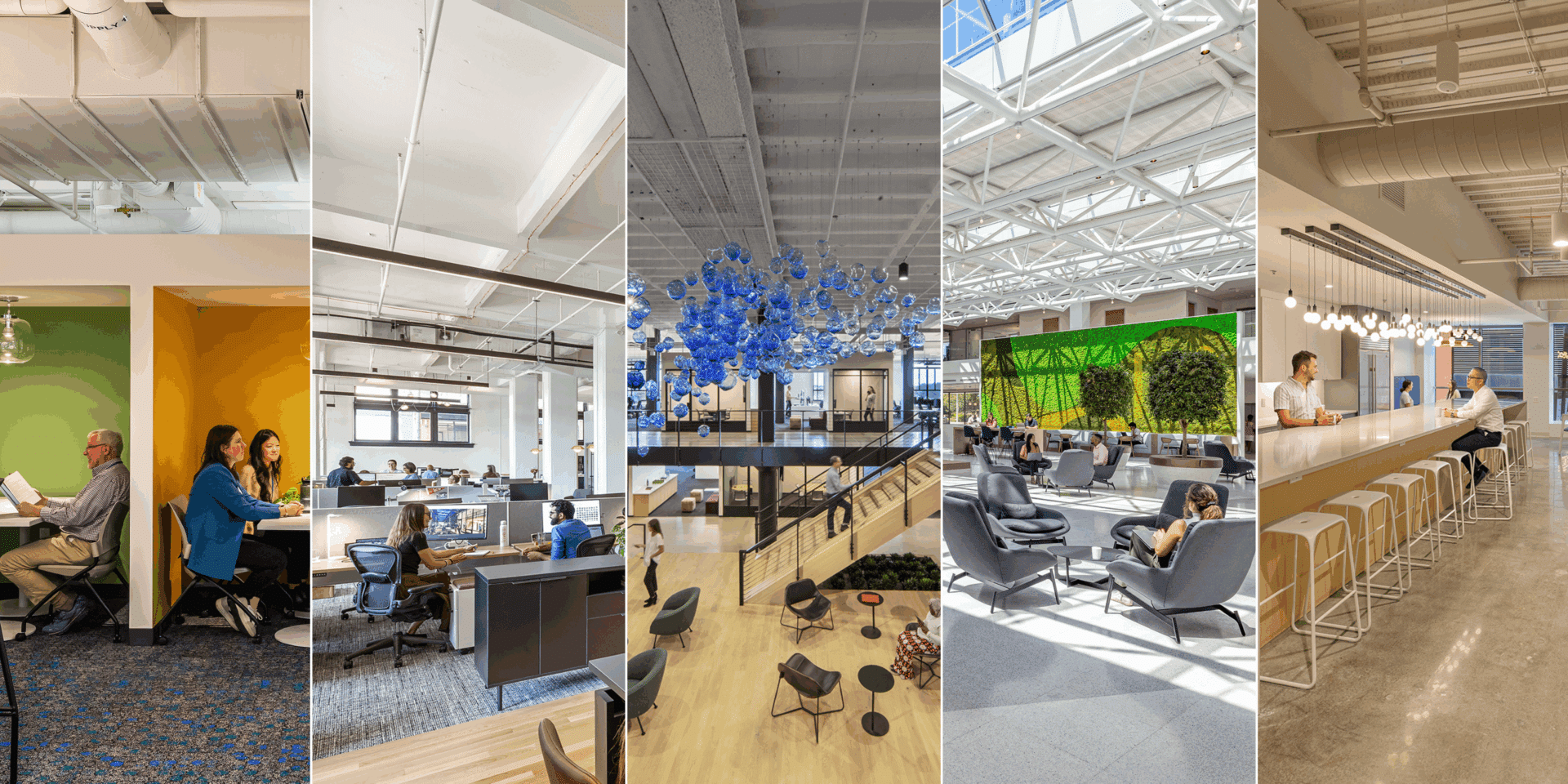
Companies are increasingly choosing to renovate existing office spaces to create modern, inviting and efficient environments that align with current work culture and employee expectations, rather than building new or staying in outdated properties.
“More return-to-office mandates combined with the large number of outdated and underutilized workspaces is driving demand for these types of projects,” said Trivers Associate Principal Amanda Truemper, AIA. “Companies have reached a critical point where they can no longer do nothing. In today’s competitive talent market, they need to invest in high-quality environments that enhance the employee experience and reinforce their mission and culture.”
Many companies are renovating instead of building new workspaces due to cost savings, faster timelines and reduced waste.
“You don’t have to relocate to improve your workspace,” said Trivers Senior Interior Designer Sam Lang, NCIDQ. “Strategic reuse just makes sense from a financial and sustainability perspective. Working with clients to help them uncover the potential in their existing spaces is one of the things I love about being a designer.”
Renovation Approaches
These projects can range from cosmetic updates to complete overhauls.
Minor to moderate renovations include:
- Enhancing the space with a refreshed color palette.
- Adding soft touches like area rugs and artwork.
- Minor updates to flooring, such as refinishing existing wood or concrete or replacing dated carpeting.
- Incorporating branding and wayfinding elements.
- Replacing or updating existing furniture for workstations or private offices, lounges and conference rooms.
- Updating lighting fixtures and audio-visual systems.
- Changes in aesthetic finishes to metals.
- Changes to ceilings, such as replacing worn ceiling tiles in existing systems or installing lightweight acoustic panels for sound control in open office environments.
Examples of major renovations are:
- Architectural changes such as adding or removing walls or doors.
- Altering the physical layout of the office to optimize workflow and spatial efficiency.
- Changing or updating mechanical, electrical or plumbing systems.
- Significant finish/aesthetic updates such as restroom or kitchenette improvements.
- Modifying the building envelope or enclosure to improve energy performance
- Adding windows to bring in more daylight.
For minor to moderate renovations, consider working with an interior designer. Major renovations will require the expertise of a licensed architect. Full-service firms such as Trivers handle office renovations of every scale, with interior designers and architects working together to design and implement successful projects.
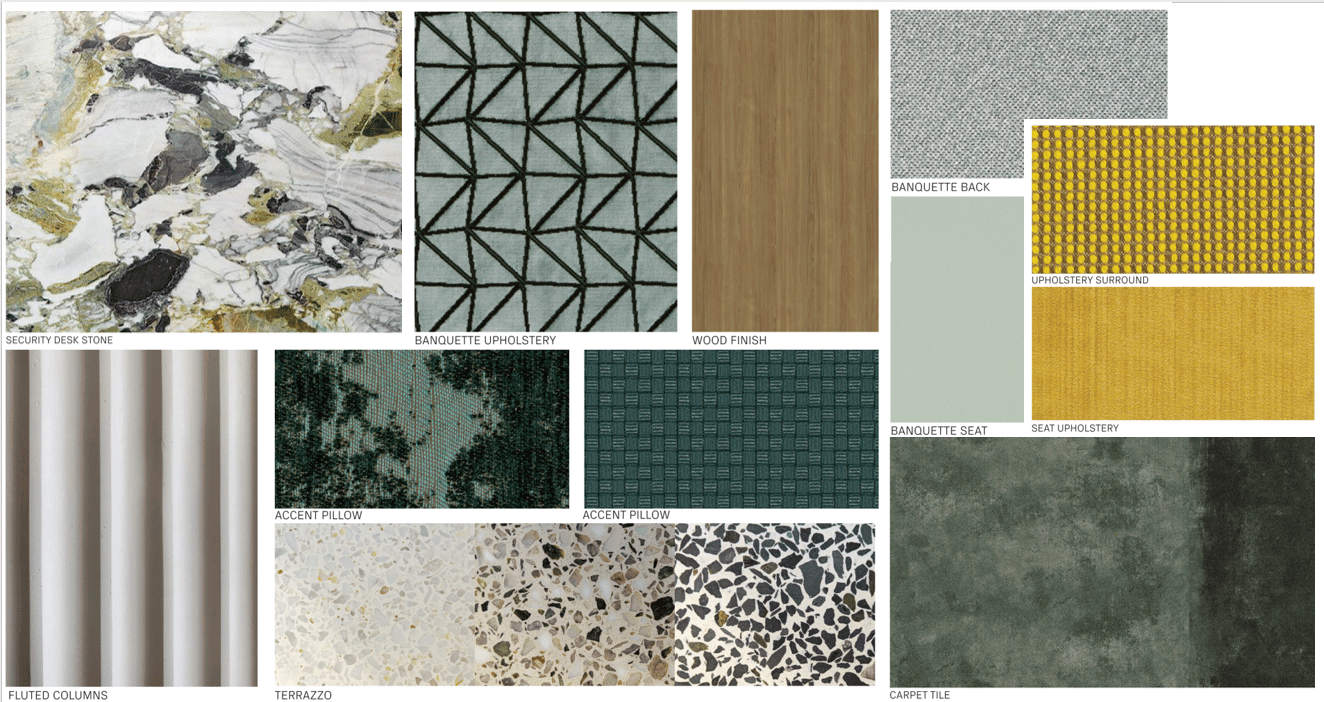
“Workplace renovations can be like a design puzzle—identifying features that we can reuse and blending them with new elements to produce a fresh new experience for employees within a budget that makes sense,” Sam said.
Laying the Groundwork for a Successful Renovation
Steps to ensure a successful office renovation—no matter the scale—include:
- Define your goals. Clarify what you want the renovation to achieve, such as more opportunities for employee collaboration, updated systems or stronger company branding.
- Communicate your company’s unique needs and culture. Share how your teams work, what your organization values, and the behaviors you want your space to support.
- Establish a budget and desired schedule. Set clear financial and timing parameters early so the design team can align scope, materials and phasing accordingly.
- Hire the right design partner. Choose a team with relevant experience that listens and is strategic, creative, open-minded and collaborative.
- Determine the amount of employee involvement. Decide how and when employees will contribute to the process so that their needs are accurately represented. Provide regular updates to maintain engagement and minimize disruption.
- Capitalize on strengths. Leverage the existing assets of your building or workspace, including its unique history and character.
- Assign an internal point person to run your project. Identify someone who can coordinate decisions, align stakeholders and serve as the main liaison with the design team.
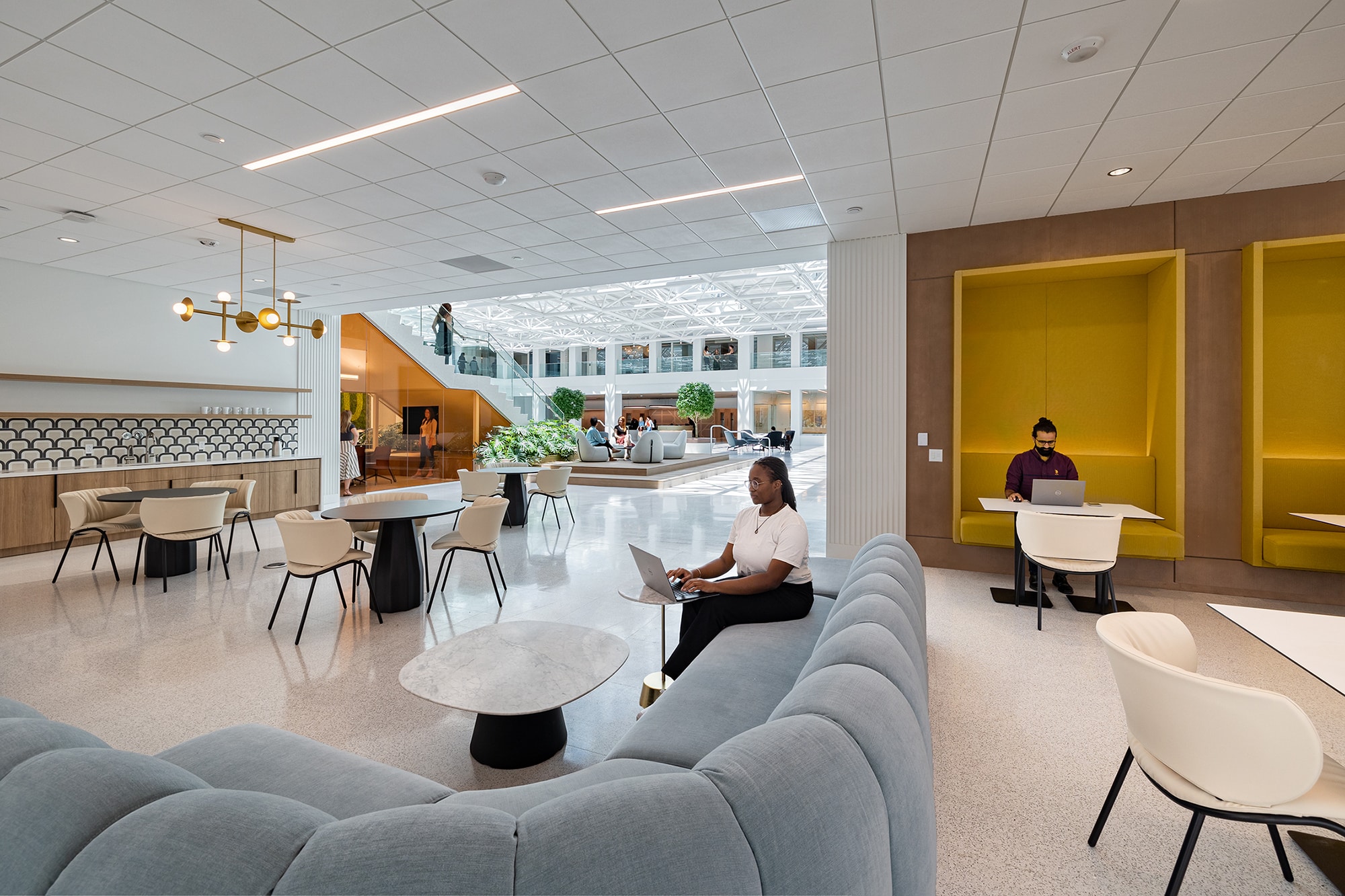 100 N Broadway Tower
One Office Building, Two Renovation Approaches
In 2022, the Trivers team completed both an asset repositioning and tenant improvement project at the Broadway Tower—a 21-story office building constructed in 1975 that occupies an entire city block in downtown St. Louis.
The building’s two-story atrium used to be an uninspiring, outdated banking center with waiting areas and a wall of teller windows. In partnership with Larson Capital Management, Trivers repositioned this relic into a light-filled, welcoming gathering space designed for today’s workers. The exterior was redesigned to better connect visually from the inside out, replacing bulky projections and staircases with more natural light, native plantings and new glass canopies. Interior renovations included adding shared tenant amenities like a high-tech conferencing center, co-working lounges and wellness-focused features like a terrazzo monumental stair, walking track, preservation of the existing abundant skylights and extensive greenery—including the region’s largest preserved moss wall. Natural materials, accessible outdoor workspaces and a new café further enhanced the experience for all tenants and visitors to the property.
In the same building, Trivers reimagined the headquarters of McCormack Baron Salazar (MBS) for its employees’ post-pandemic return to the workplace. Textures, warmth and a sense of casual formality define the central design approach, supported by thoughtfully integrated technology and flexible collaboration spaces that help MBS stay connected with its offices nationwide. By offering multiple design options and palettes, Trivers enabled MBS to select the direction that most resonated with their ethos, resulting in a workplace that reflects their “serious but not formal” culture.
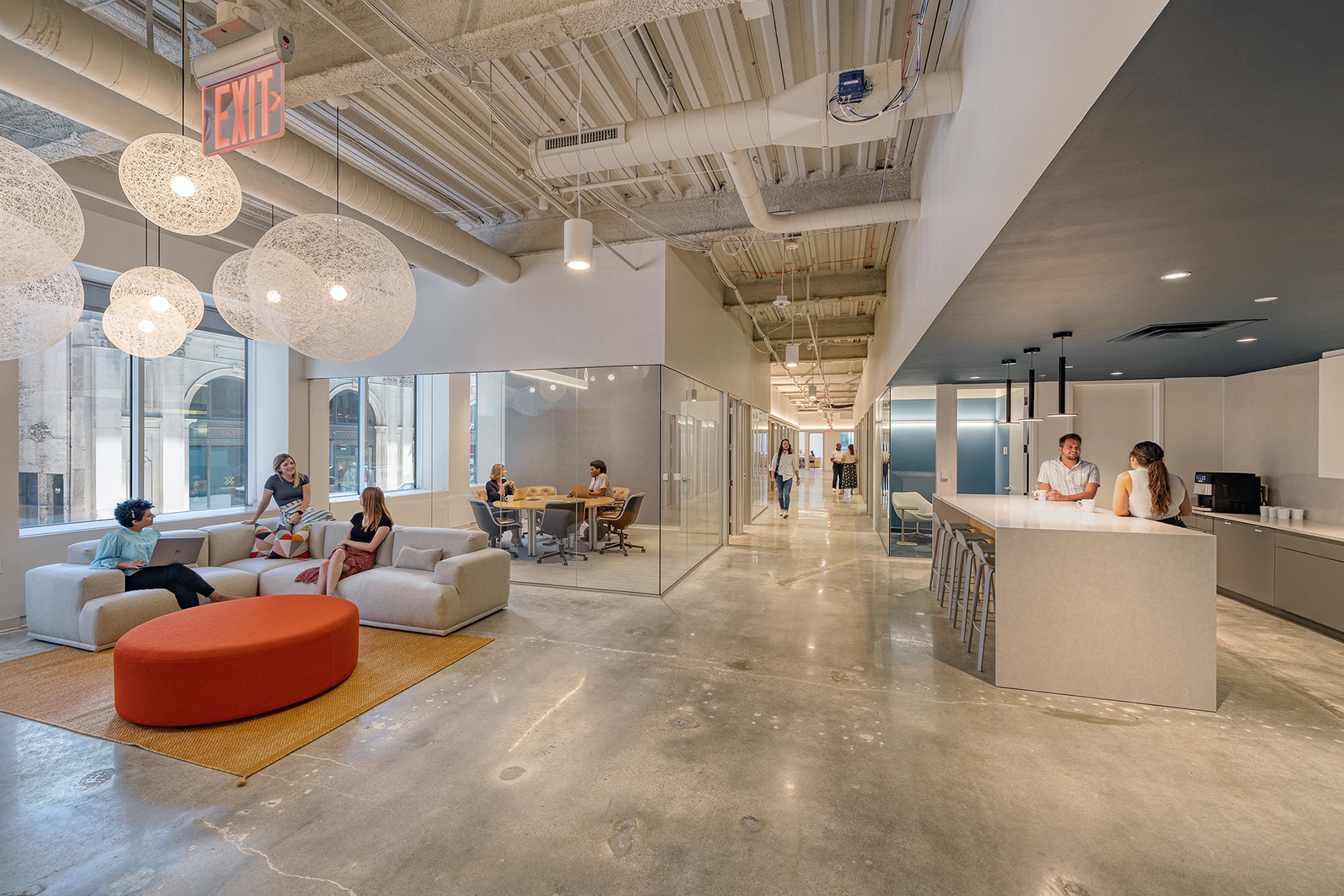
“It was imperative for both Larson Capital Management and McCormack Baron Salazar to create environments that would attract people back to the office,” Amanda said. “At different levels of the office renovation scale within the same building, Trivers envisioned what tenants and employees wanted and needed in their workplaces—flexibility, best-in-class technology, connection to the outdoors and opportunities for wellness—to enhance their experience.”
To learn more about how Trivers can help you refresh or reimagine your office, email contact@trivers.com or call 314-241-2900.