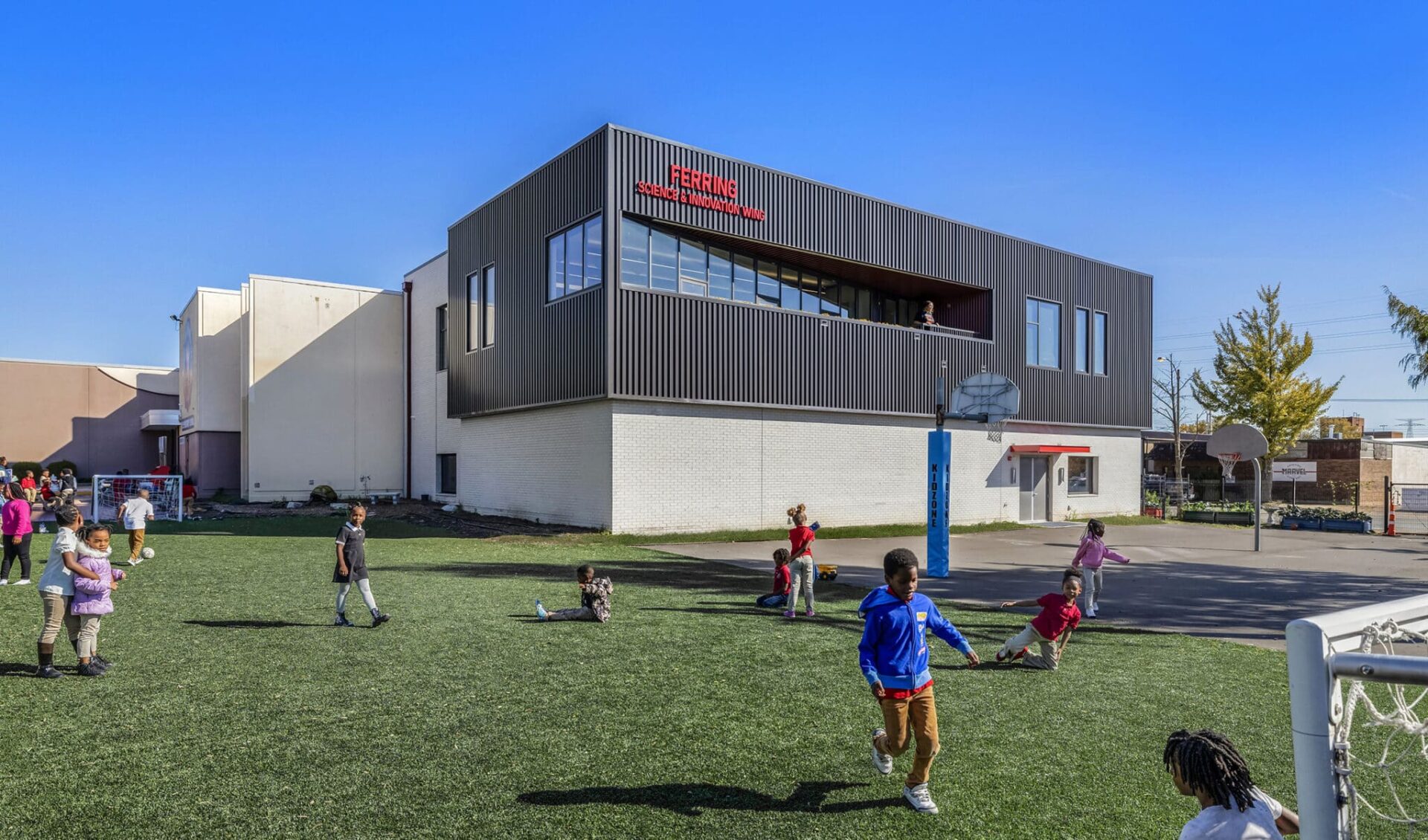
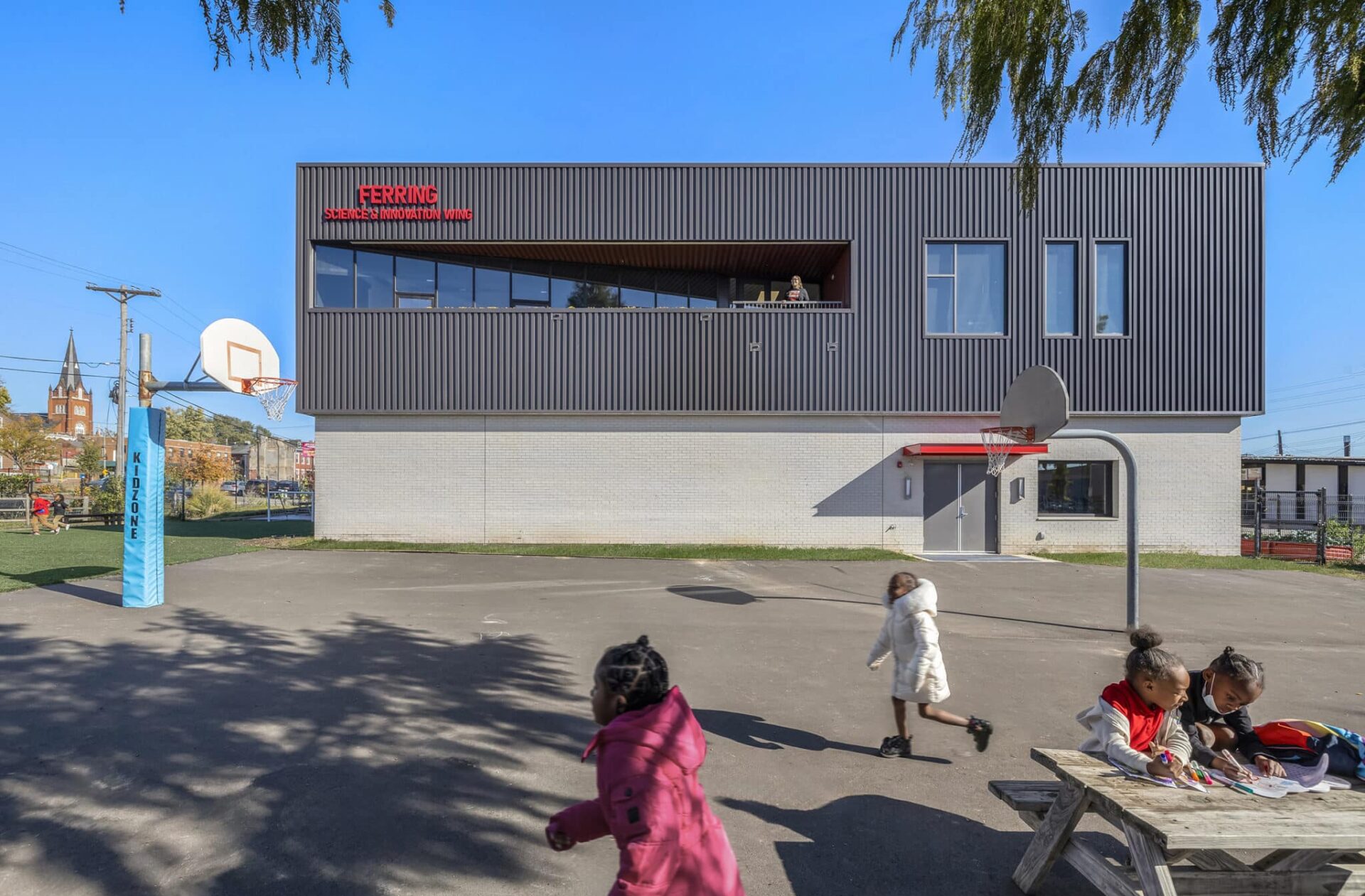
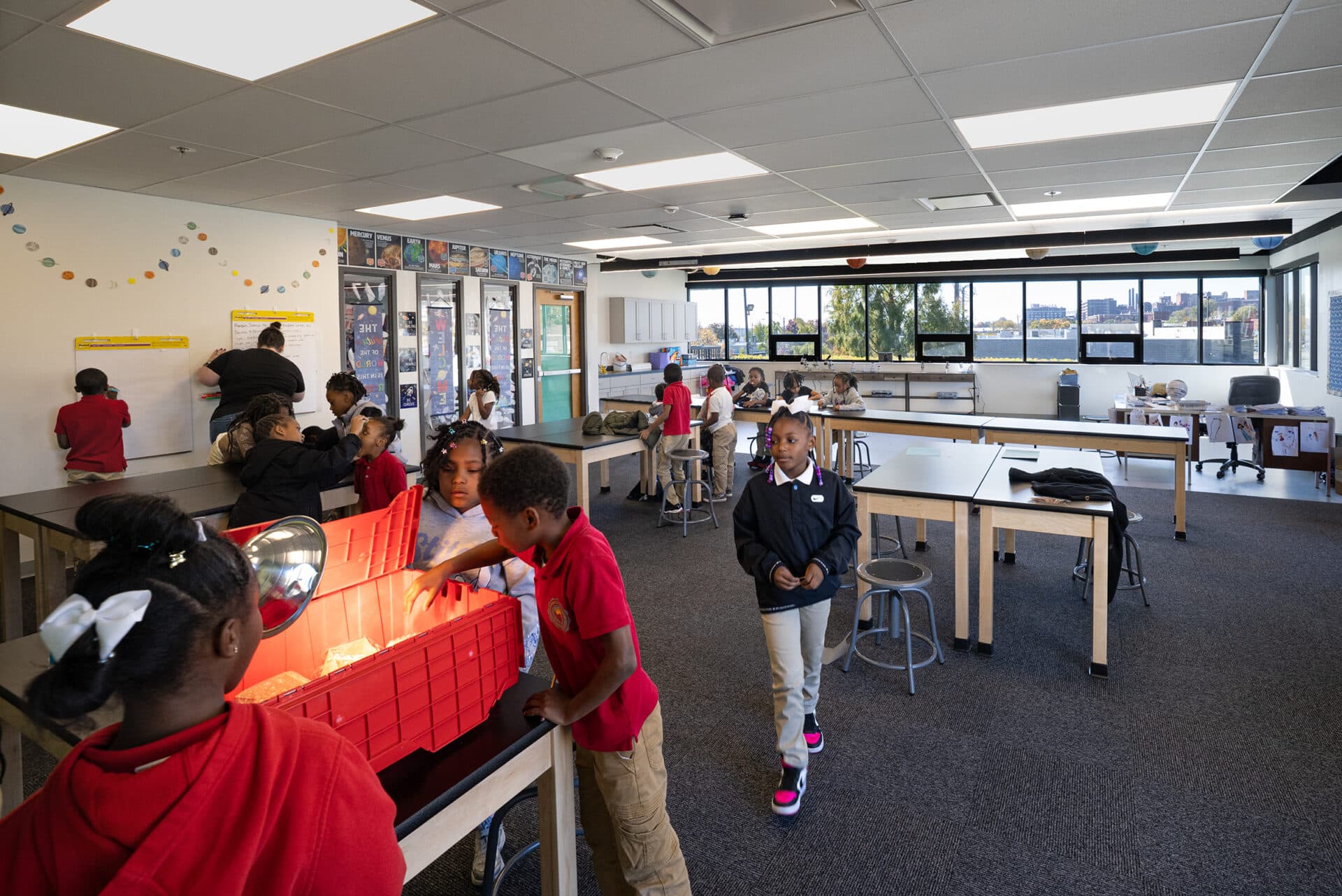
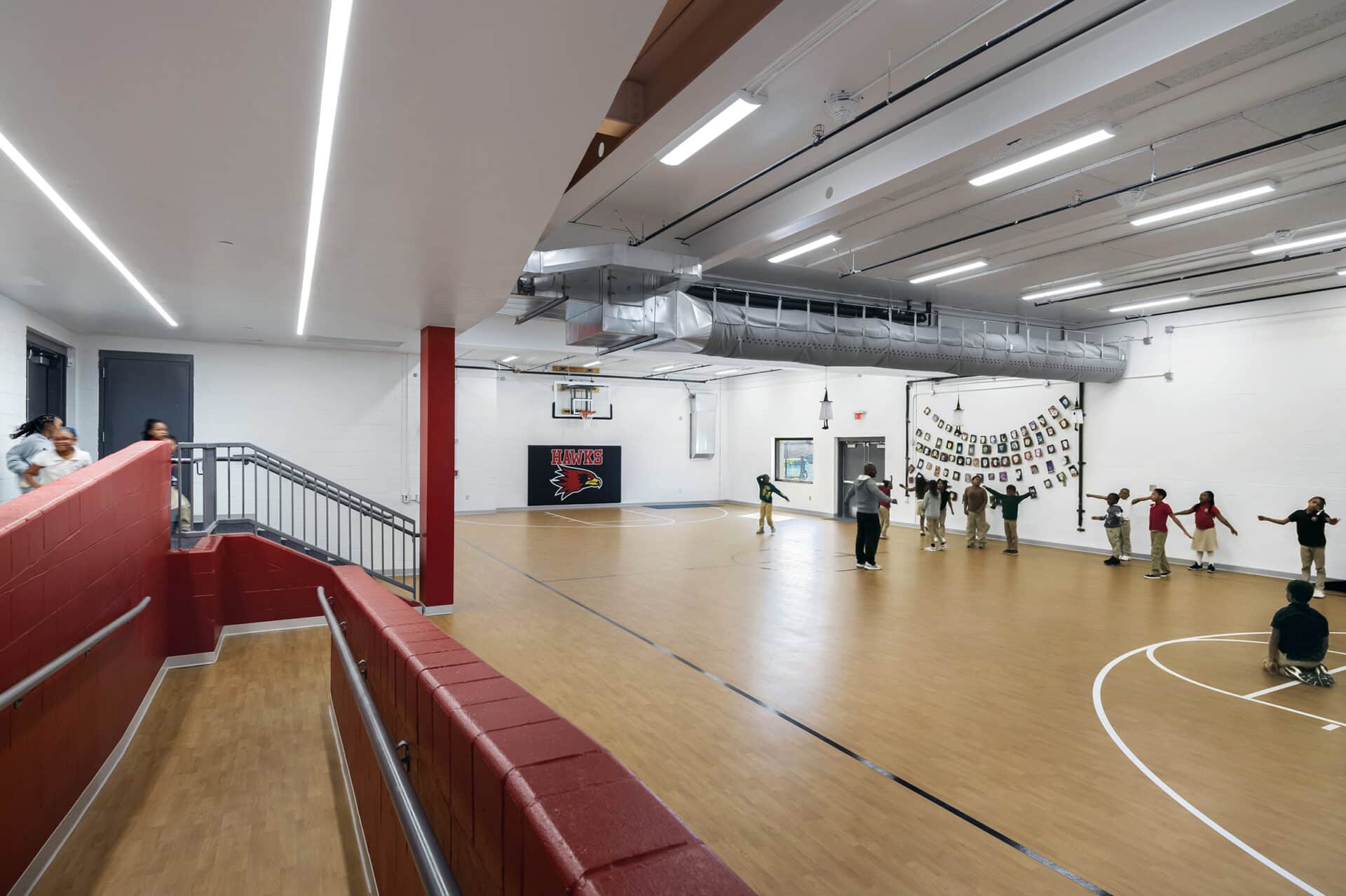
Trivers celebrated the ribbon cutting of the Ferring Science & Innovation Wing at Lift for Life Academy Elementary School in St. Louis’ Kosciusko neighborhood on September 15, 2025.
When Lift for Life Academy opened in 2000, it became the first charter school in the City of St. Louis to serve students in sixth through 12th grades. In 2017, Trivers was selected to develop a master plan for the overall campus, including an elementary school. Following the completion of the master plan, Trivers collaborated with school administrators and community leaders to transform a former church into Lift for Life Academy Elementary School. When it opened in 2019, Trivers and the team knew their work was not yet finished. The phased master plan called for a future building addition.
“Having a storm shelter on campus was a long-term goal identified during the elementary school master plan process,” said Trivers Associate Principal Neil Chace, AIA. “Trivers addressed the need for additional classrooms along with more indoor multi-purpose space through the addition of the Ferring Science & Innovation Wing.”
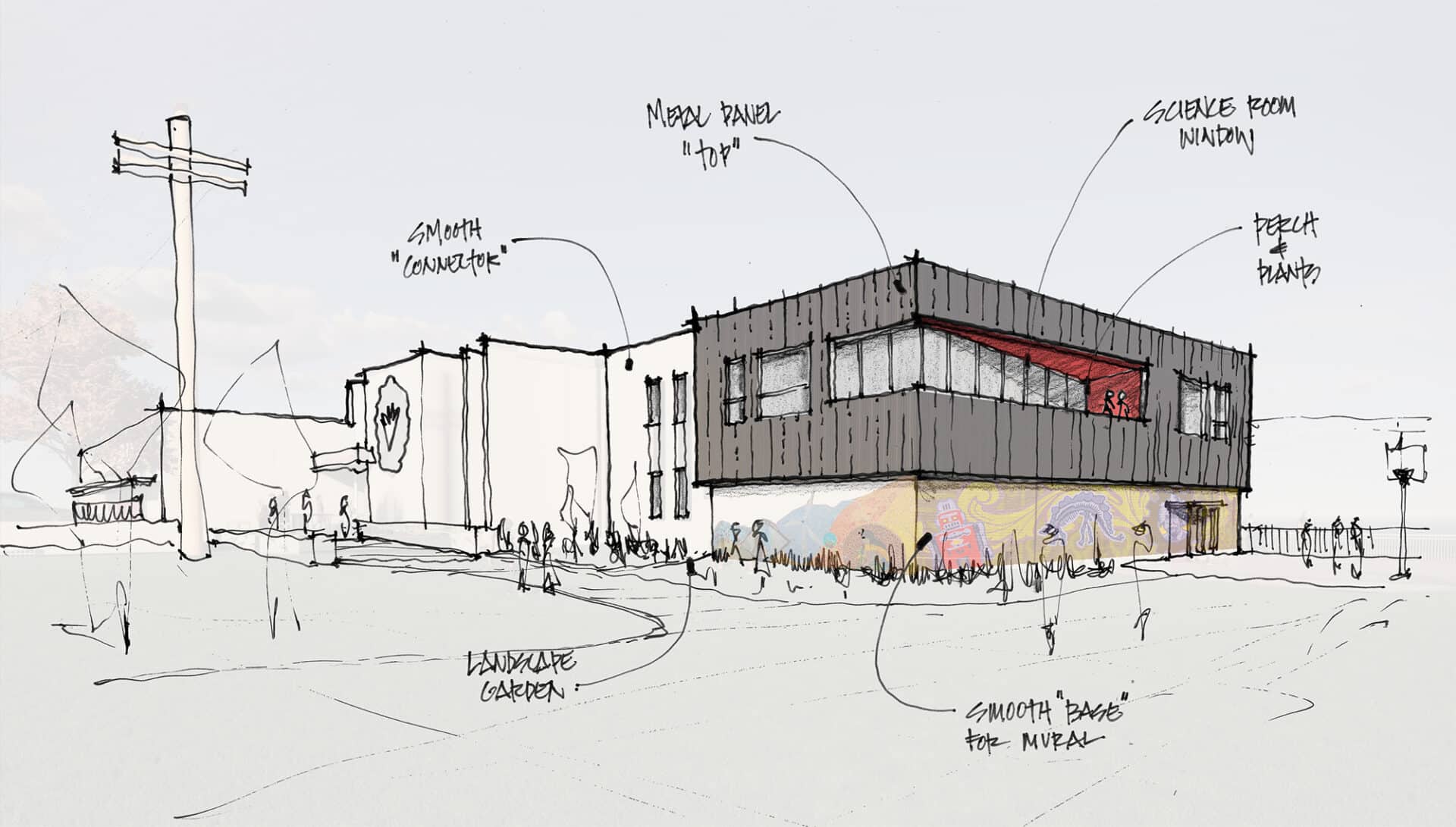
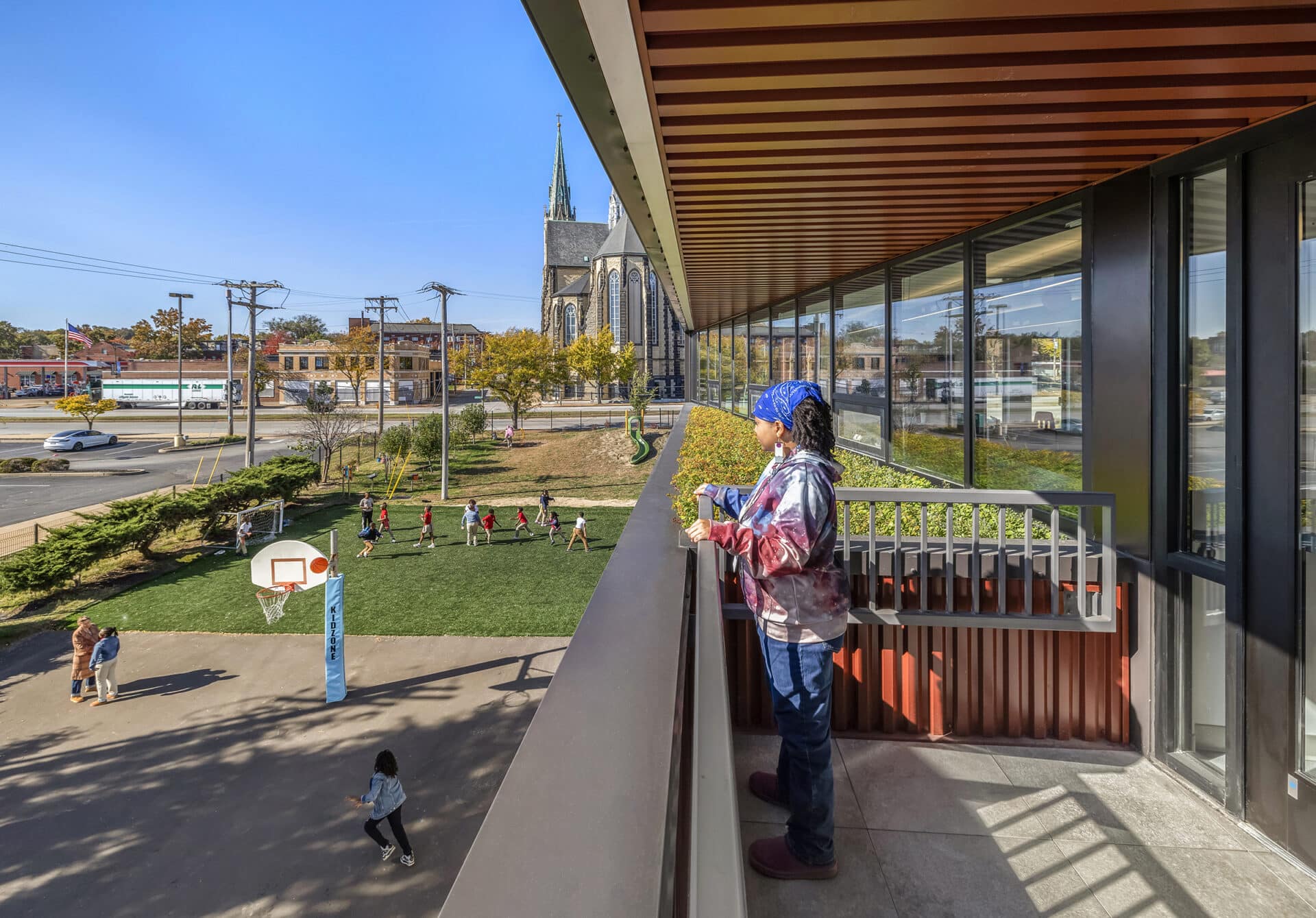
The wing’s first-floor storm shelter is one of the only storm shelters in the area that meets International Code Council (ICC) 500 standards. Designed for flexibility, the storm shelter will be used as an indoor gym and host after-school programs. The shelter’s roof serves as the floor of a new science lab, classrooms, and flexible learning spaces, including an outdoor “perch” with a small roof garden.
“Putting classrooms and learning spaces on top of the storm shelter made the design more challenging, but it reduced costs and construction complexities in the end,” Chace said. “Given the tight urban site, it also helped conserve more existing outdoor green space.”
To ensure safety during emergencies, many storm shelters are boxy, bulky and don’t have windows. Trivers designed Lift for Life Academy’s to be more welcoming with FEMA stormproof windows that invite natural light and a façade featuring a large, paint-by-number mural that students will help create.
“Every four to five years, the mural will evolve as new generations of students make their way through the school,” Chace said. “The mural adds vibrancy to the building and enhances students’ feelings of ownership and pride in their school, which we hope translates into better student outcomes.”